
ASSEMBLE Curatorial Lab - Larnaca, Cyprus
- Date
- 11 – 13 Jun 2026
- Location
- Larnaca, Cyprus
- Format
- In-person
- Hosted by
- Larnaka 2030
The First ASSEMBLE Curatorial Lab - Larnaca, Cyprus
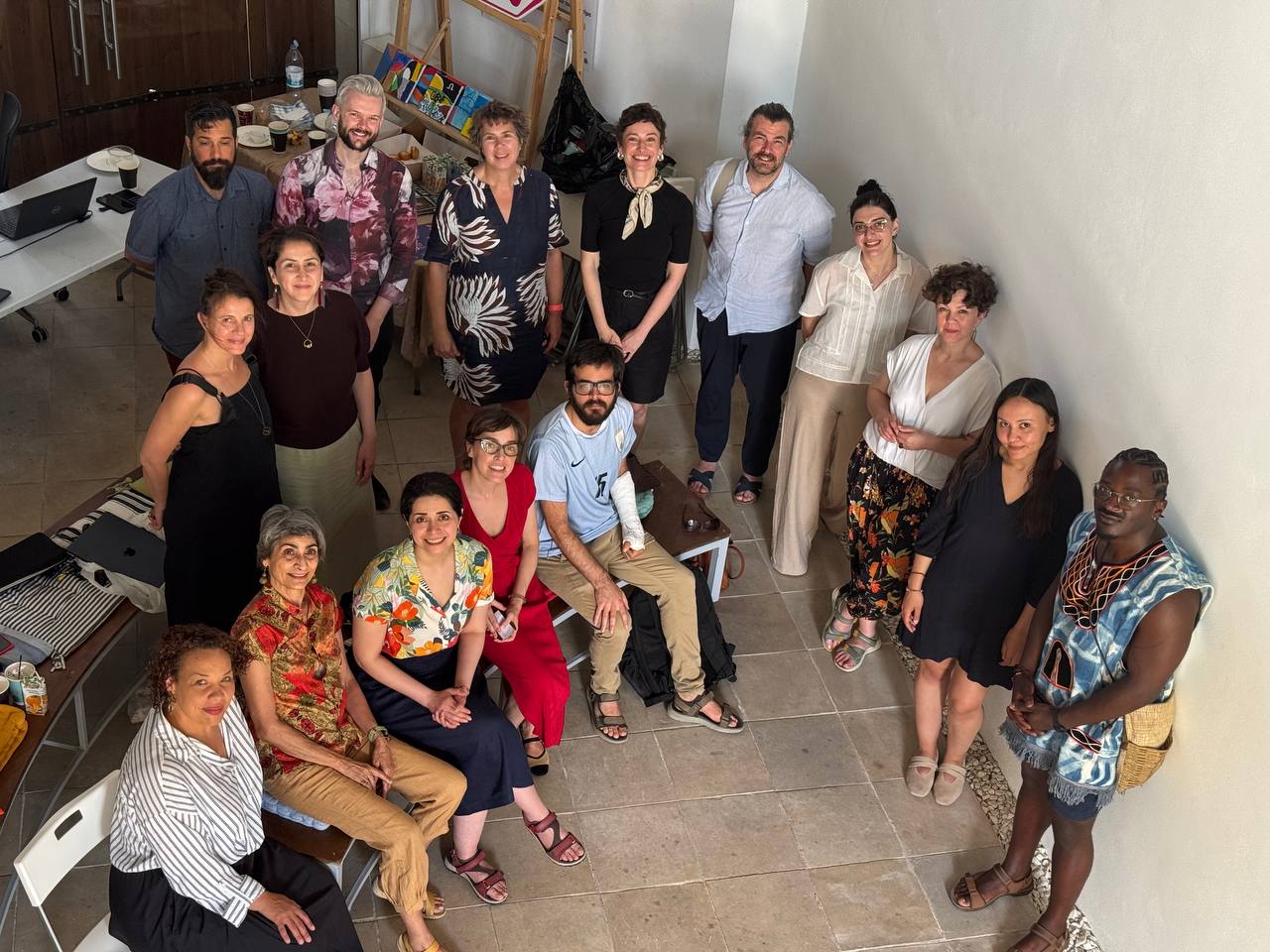
The first ASSEMBLE Curatorial Lab brought together four Curatorial Fellows, their producer partners and a group of invited experts in Larnaca for three days of shared work across practice, policy and place. The occasion marked the programme's first in-person gathering and the beginning of a twelve-month residency that will include three more curatorial laboratories, a group residency and a closing exhibition.
The programme moved across three registers: paired presentations by Fellows and their partner organisations; a public evening in which Fellows introduced their work to Larnaca's cultural community; and a participatory workshop - Making Practice Legible Without Losing Complexity - facilitated by Julie Trébault of Artists at Risk Connection and Alix Pornon of Cité internationale des arts. Site visits to Larnaka2030's community-led projects grounded the programme's broader questions in a specific urban context shaped by its own histories of displacement and collective memory.
Situating the Programme
The Lab opened with an introduction to ASSEMBLE's framework: a fellowship model built around stability rather than urgency, offering Fellows a twelve-month arc of development, including three international Curatorial Labs, a UK group residency and a closing digital exhibition, in place of the short-term residency model that has historically dominated support for displaced practitioners.
Yohann Floch, Director of Operations at On the Move, introduced the research underpinning the programme: a two-year, four-volume initiative mapping the conditions, obstacles and policy gaps affecting artists at risk across Europe. The research documented a stark pattern, that support for displaced artists is inconsistent across EU member states, shaped as much by political circumstance as by principle, and made the case for a dedicated EU-level mechanism equivalent to the existing programme supporting researchers at risk.
Fellows and Partners in Dialogue
The first full working day centred on paired presentations by the Curatorial Fellows and their producer partners - a structure that placed practice, not just policy, at the centre of the programme's opening exchange.
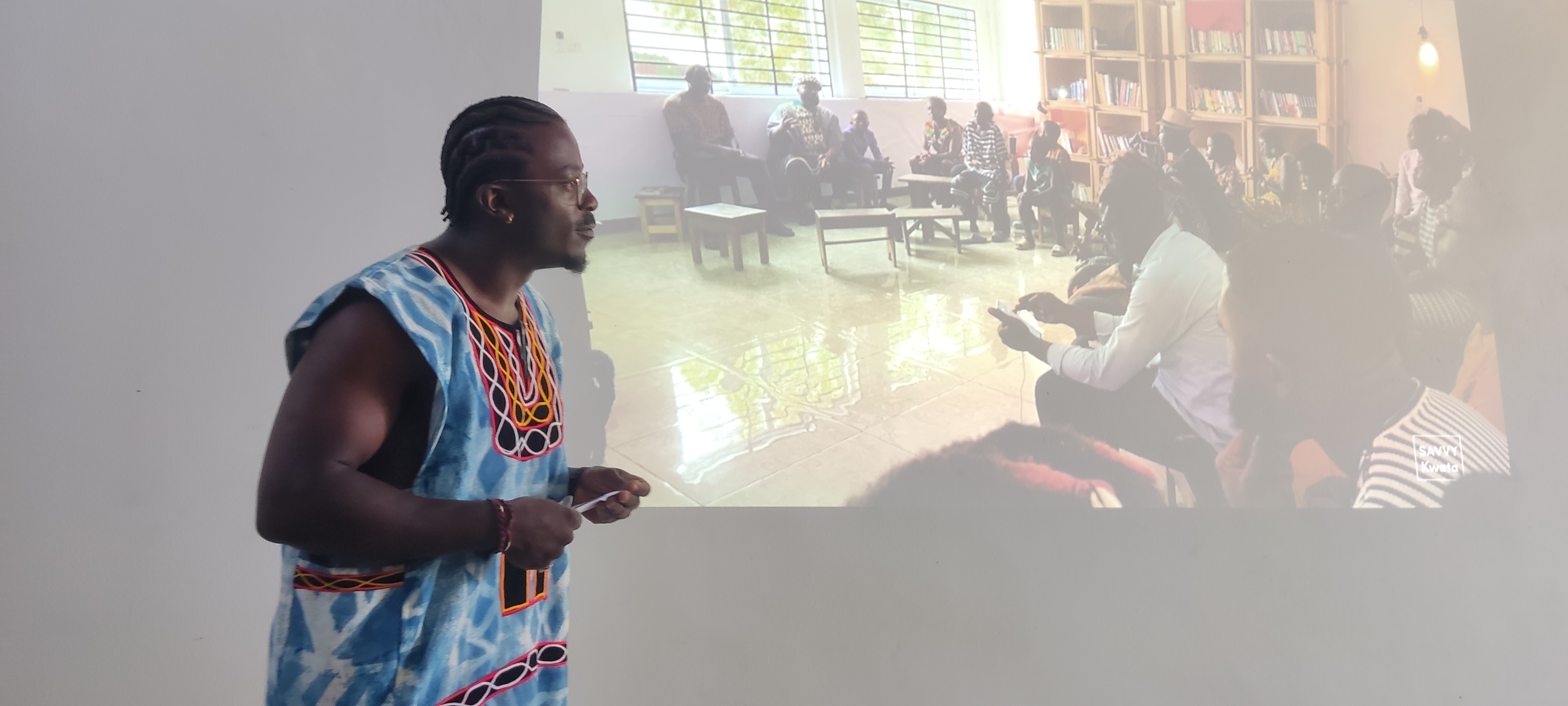
Mokia Dinnyuy Manjoh, working with producer Argyro Toumazou (D6:EU), spoke about identity, cultural sovereignty and decolonial knowledge through the work of Sasa Kwata, a farm and community library he helped establish in Limbe, Cameroon - a space for holding knowledge that sits outside conventional archival systems.
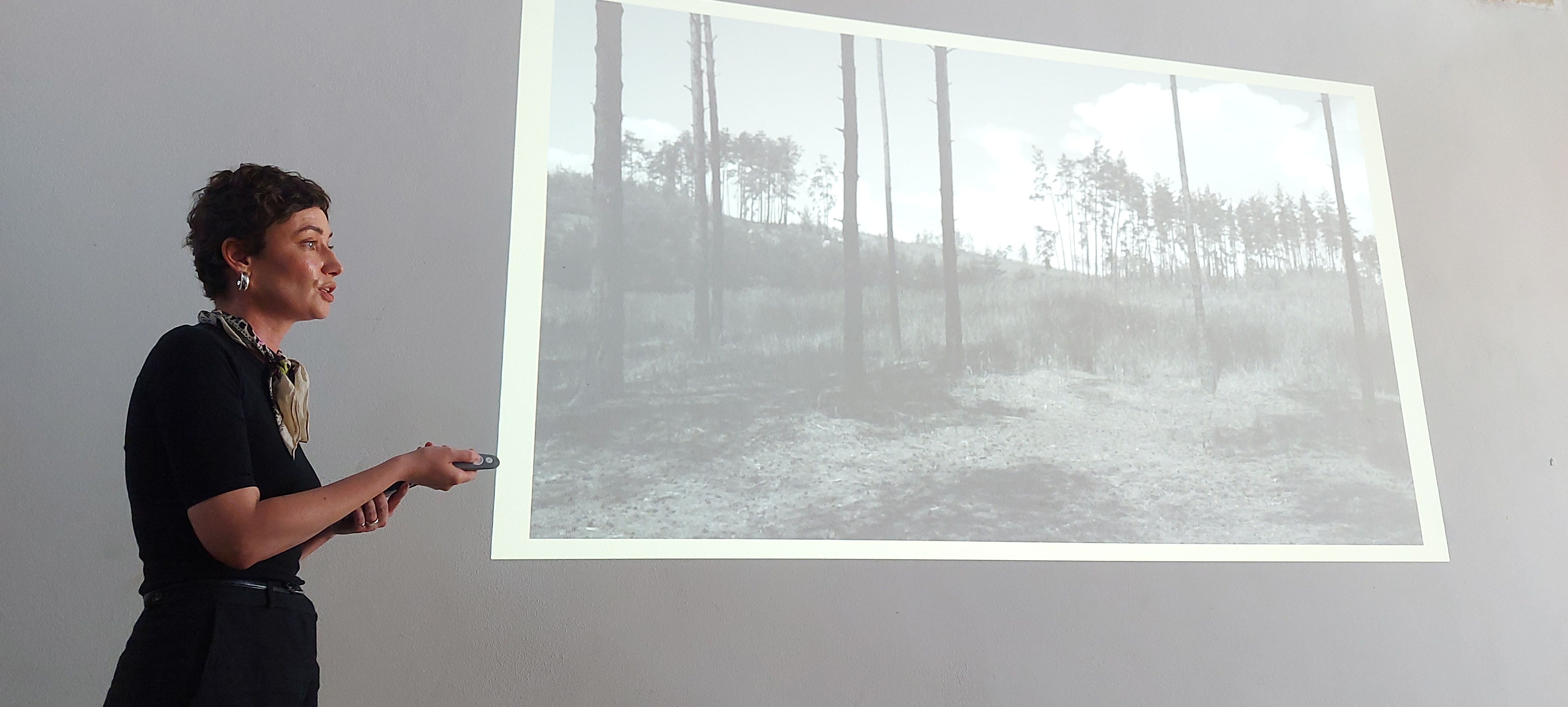
Maria, working with producer Lucy Nychai (Congress of Cultural Activists), presented her research project Bodies & Landscapes, exploring how war, forced displacement and ecological crisis reshape the relationships between people, land and memory - a practice that began in 2008 at the edge of the Chernobyl exclusion zone and has since moved through Bologna, Taipei and Zaporizhzhia.
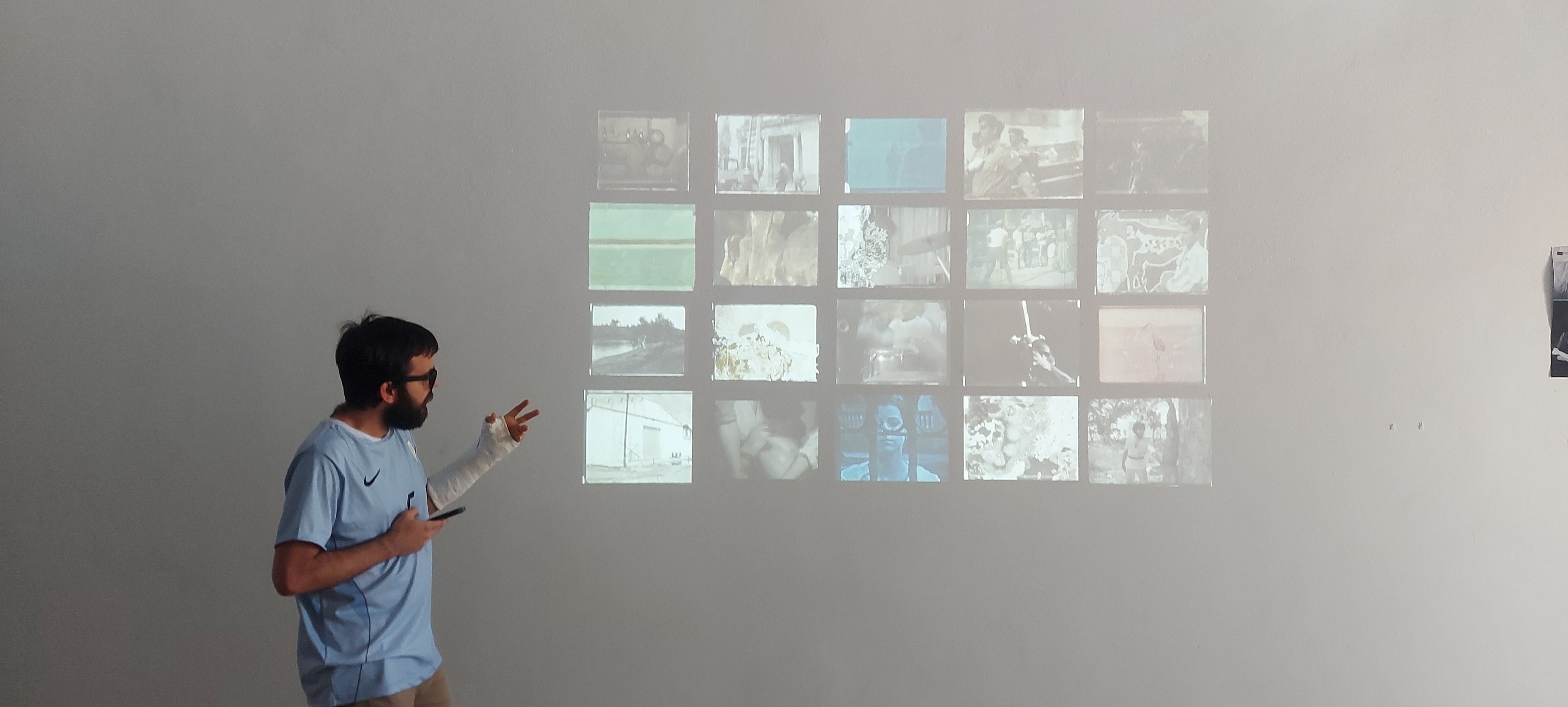
Fabio Quintero, working with producer Ixone Sadaba (Moving Artists), introduced Subterráneos - the first archive of independent Cuban amateur cinema, relocating to the Basque Country because no institutional support existed in Cuba for preserving material now at serious risk from climate, degradation and cultural amnesia. Over 1,000 titles have been identified; around 600 have been rescued so far.
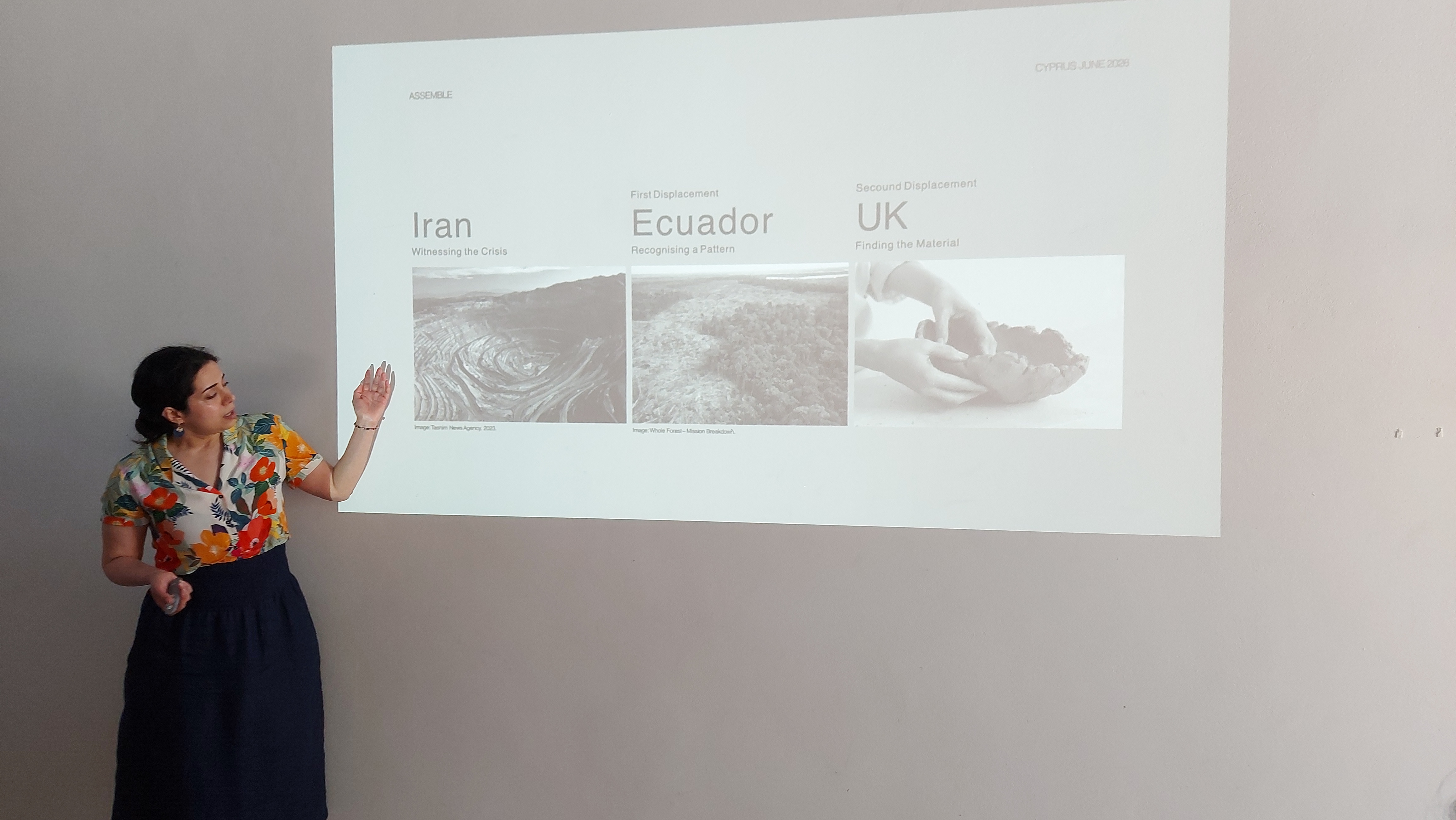
Roya, working with producer Andrea Carter (D6: Culture in Transit), discussed her practice through the intersecting lenses of environmental degradation, extractive industry and displacement - tracing patterns first observed around mining communities in Iran and later recognised across Ecuador and England, and materialised through ceramic works including the Light Container series.
Collectively, the presentations traced a set of recurring concerns: the relationship between ecological transformation and forced mobility; the role of archives, testimony and community knowledge in resisting cultural erasure and the relationship between archival practice and cultural sovereignty; the ethics of representing lived experience, namely the ethics of curatorial work that engages communities shaped by conflict or marginalisation; and the structural conditions that either enable or foreclose long-term practice in contexts of precarity and the question of what it means to sustain a practice across forced displacement.
An evening in public: cultural ecologies and the role of institutions
The Lab's first day closed with a public event - an evening conversation that opened the programme's questions to a wider Larnaca audience of artists, cultural professionals and organisational representatives.
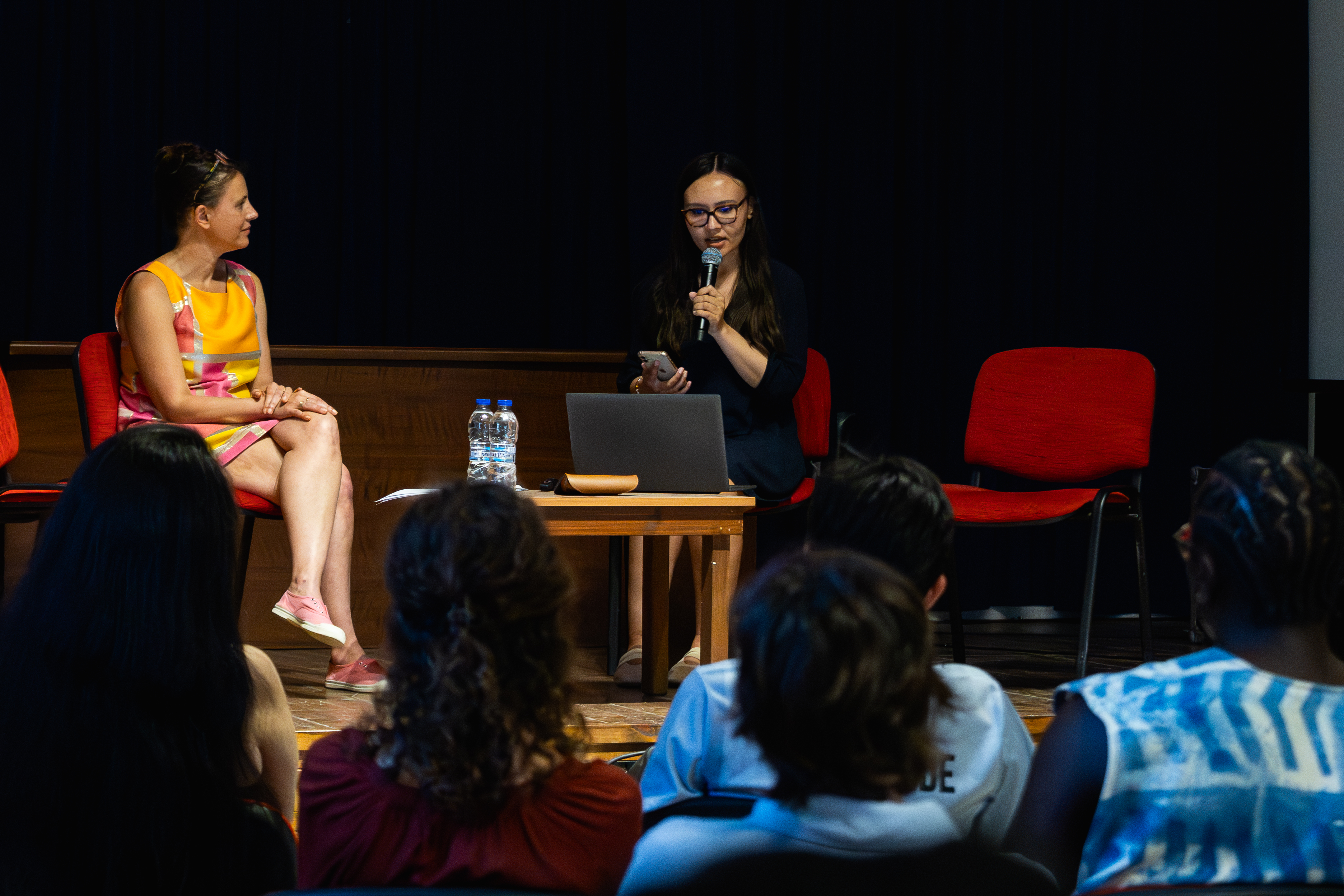
Julie Trébault, Founder and Executive Director of ARC - Artists at Risk Connection, set the conceptual frame. Displacement, she argued, is rarely only geographic. For artists, it typically means losing access to audiences, collaborators, archives, studios and the professional networks that took years to build. An artist may arrive in safety and find themselves structurally disconnected from the conditions that made their practice possible. The response this demands is not only protection - it is the deliberate construction of what she called cultural ecologies: "living networks of people, institutions, resources, and acts of solidarity that make artistic freedom not only possible, but sustainable."
The argument was grounded in a consistent observation from ARC's work across 85 countries: that what enables artists to continue, more than emergency funding or relocation support, is the less legible fabric of professional relationship. "Sustaining artistic practice in times of crisis is never a single intervention, it is a network of relationships. It happens when a fellow artist opens a door; when a curator makes an introduction; when a residency creates a space; when an institution takes the risk of putting an exhibition on its walls."
Alix Pornon, Programme Officer at Cité internationale des arts, brought this framing into contact with institutional practice. Cité - with over 300 artist studios across two Paris sites and more than 30,000 artists hosted since 1965 has, over six decades, moved from treating the hosting of artists in exile as crisis response toward something more durable. The turning point came between 2021 and 2022, with an influx of artists from Ukraine and Afghanistan. What the experience clarified was that a residency duration of two to twelve months, designed for artistic production, is poorly suited to the timescales of personal reconstruction - rebuilding internal safety alongside material safety, navigating administrative systems, addressing trauma, rebuilding professional networks, learning a language. "We stopped thinking of the residency simply as a space of artistic production, and started seeing it as a space of transition, one that allows artists to progressively rebuild the conditions for creation."
The shift required Cité to extend its institutional relationships beyond the cultural sector: to medical centres, advocacy organisations and legal support networks, building the capacity to accompany artists through and beyond the residency rather than simply receiving them on arrival. It also required a more honest accounting of what a cultural institution can and cannot offer. The lesson was structural: that effective support is a distributed responsibility across multiple organisations, each knowing its own limits and its field well enough to ensure that closing one door opens another.
Taken together, the two presentations established the conceptual stakes for everything that followed - and posed the question that the workshop and Fellows' presentations would work through across the next two days: if artists have shown what it is possible to build under conditions of uncertainty and displacement, what must institutions build in response?
The capacity building workshop
The workshop was the Lab's methodological core and produced its most substantive collective thinking.
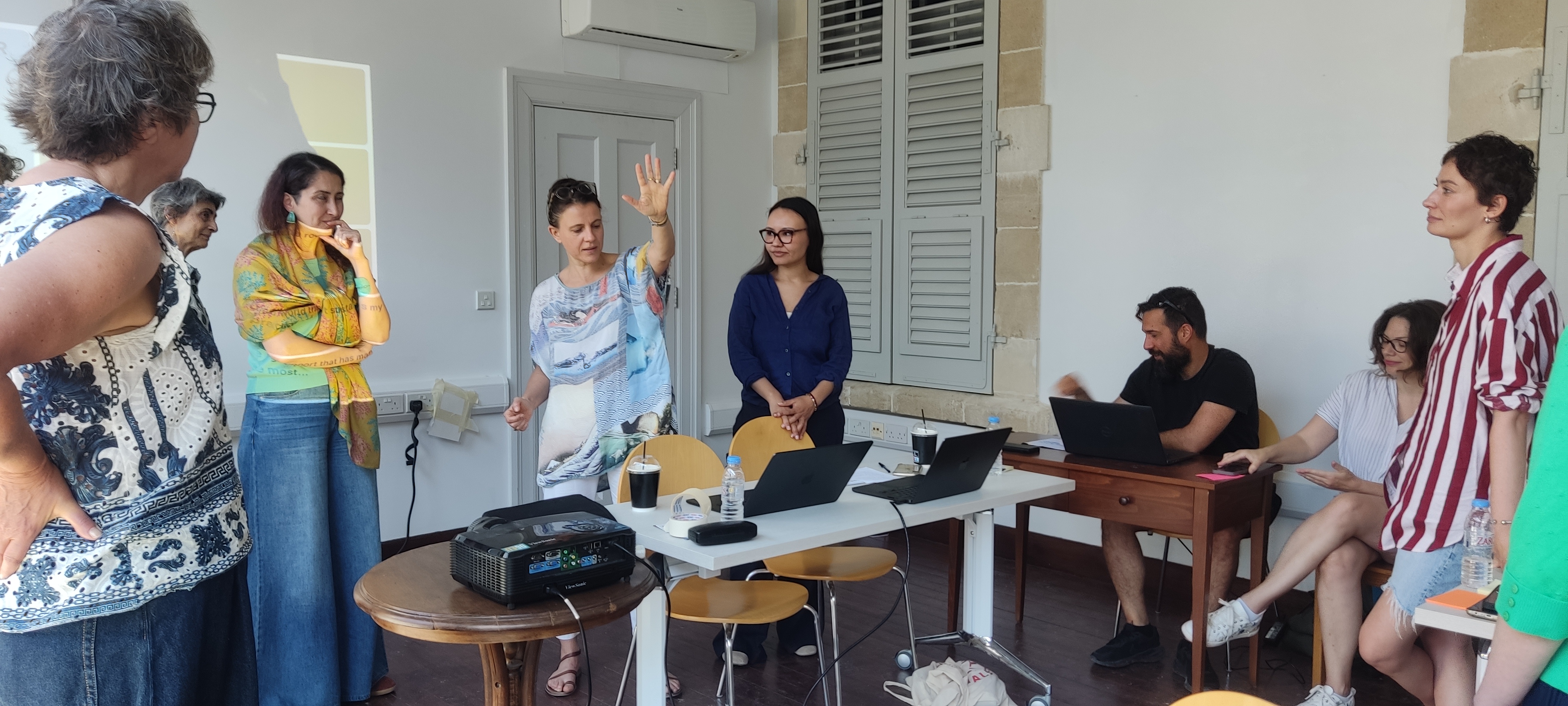
During the workshop, Fellows and partners worked in small groups to map their professional ecosystems, the relationships, organisations and resources that sustain their practice, and the points at which those ecosystems become fragile. What emerged across very different contexts was a set of shared structural conditions: practice sustained by individual goodwill rather than systemic support; funding cycles misaligned with the timescales of serious curatorial work; institutions that know the limits of what they can offer but rarely communicate those limits transparently; and a chronic compression of time.
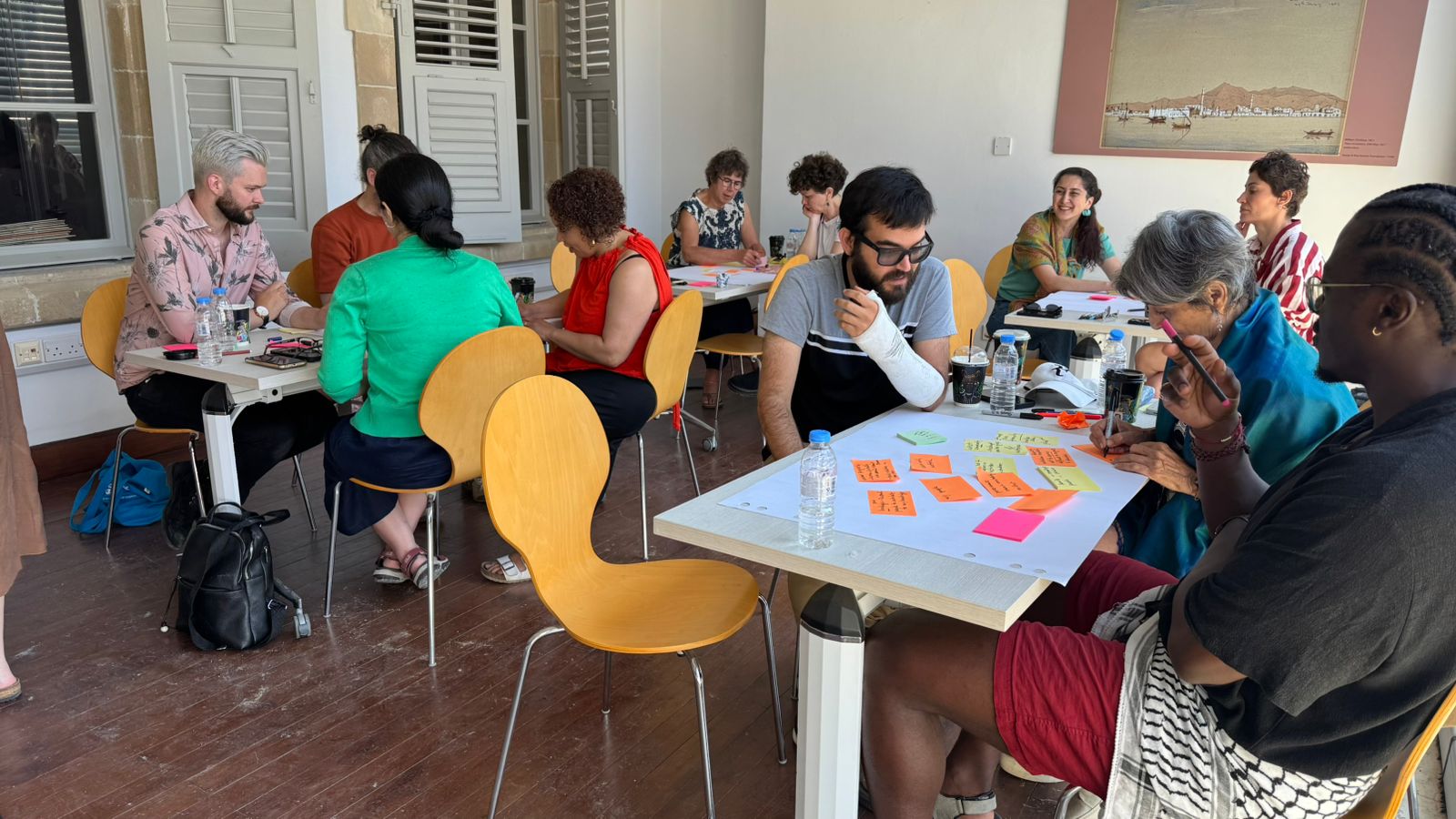
The second phase asked each person to articulate, on a post-it note, one challenge, one source of support, and one thing that is still missing. The patterns that emerged were consistent and precise. The challenge named most often was not funding but stability - in housing, income and the basic conditions for planning practice across more than a single year. The primary source of support was community: peer networks, long-term relationships with partner organisations, and the less tangible but equally operative sense of professional solidarity. What was most often named as absent was a holistic point of entry - a hub that could hold the full range of an individual's needs and direct them toward the right support, rather than leaving practitioners to navigate a fragmented landscape of specialist organisations, none of which can cover everything.
As one participant observed: "There is too much knowledge and a lack of knowledge at the same time." The phrase held two distinct problems in tension: information overload on one side; real professional isolation, and the invisibility of one another's practice and expertise, on the other.
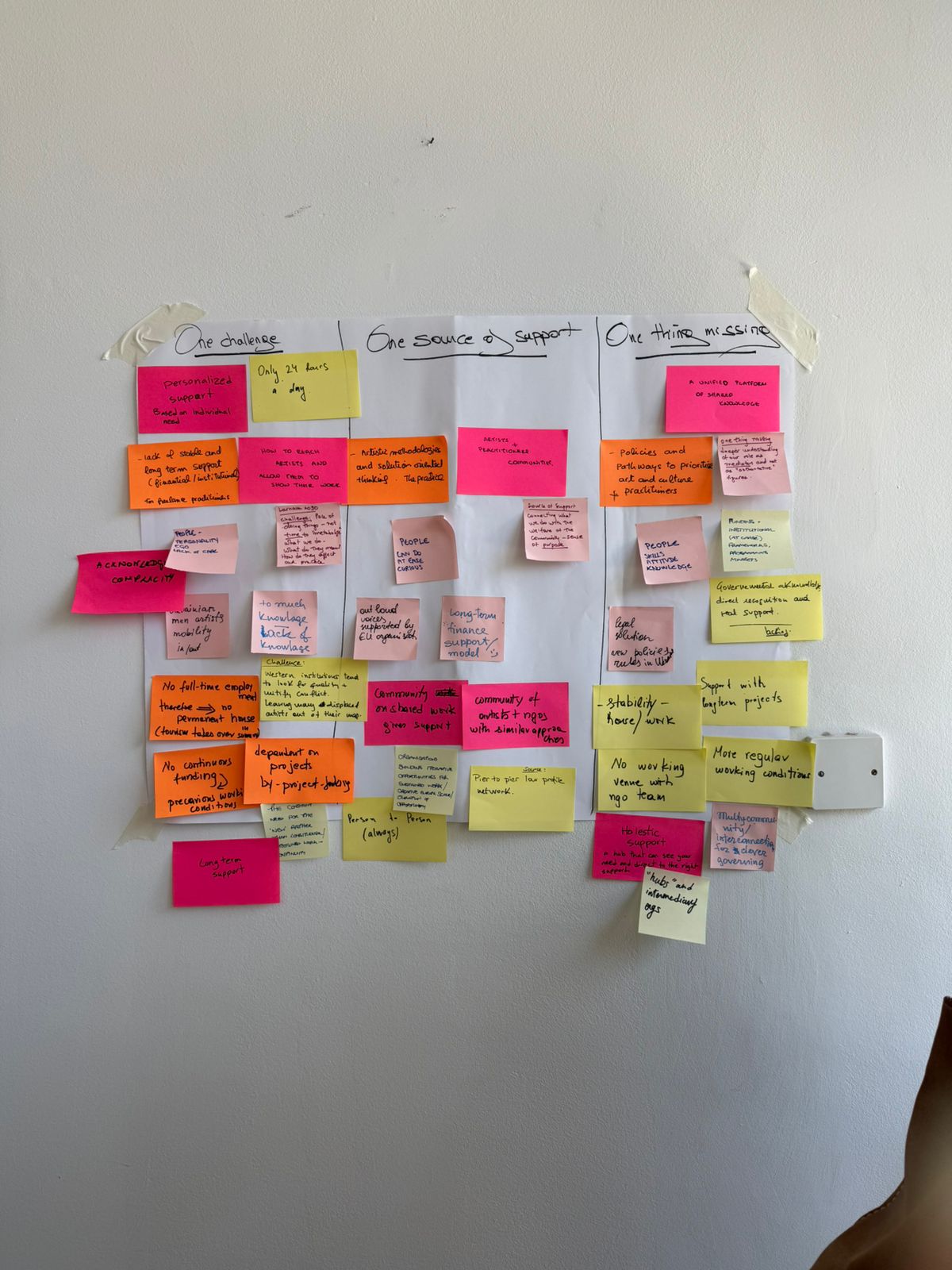
The discussion of institutional responsibility was equally direct. Roya articulated a standard for organisational practice that cut through the workshop's more abstract framings: "If you are closing any door to anyone, you should open a window for them. We cannot do this - but they can. We don't cover this part - but these organisations do." The argument was structural rather than moral: that effective support for displaced practitioners depends on organisations knowing their own limits and their field well enough to redirect, not simply to decline.
Larnaca as context
Larnaca was not incidental to the programme's themes. The city has the highest rate of displaced people of any region in Cyprus, a direct consequence of 1974, and holds in its refugee settlements and community-led cultural initiatives working models of what the Lab's workshop examined in more abstract terms: communities rebuilding collective life after forced movement; cultural practice as a mode of social cohesion rather than institutional representation.
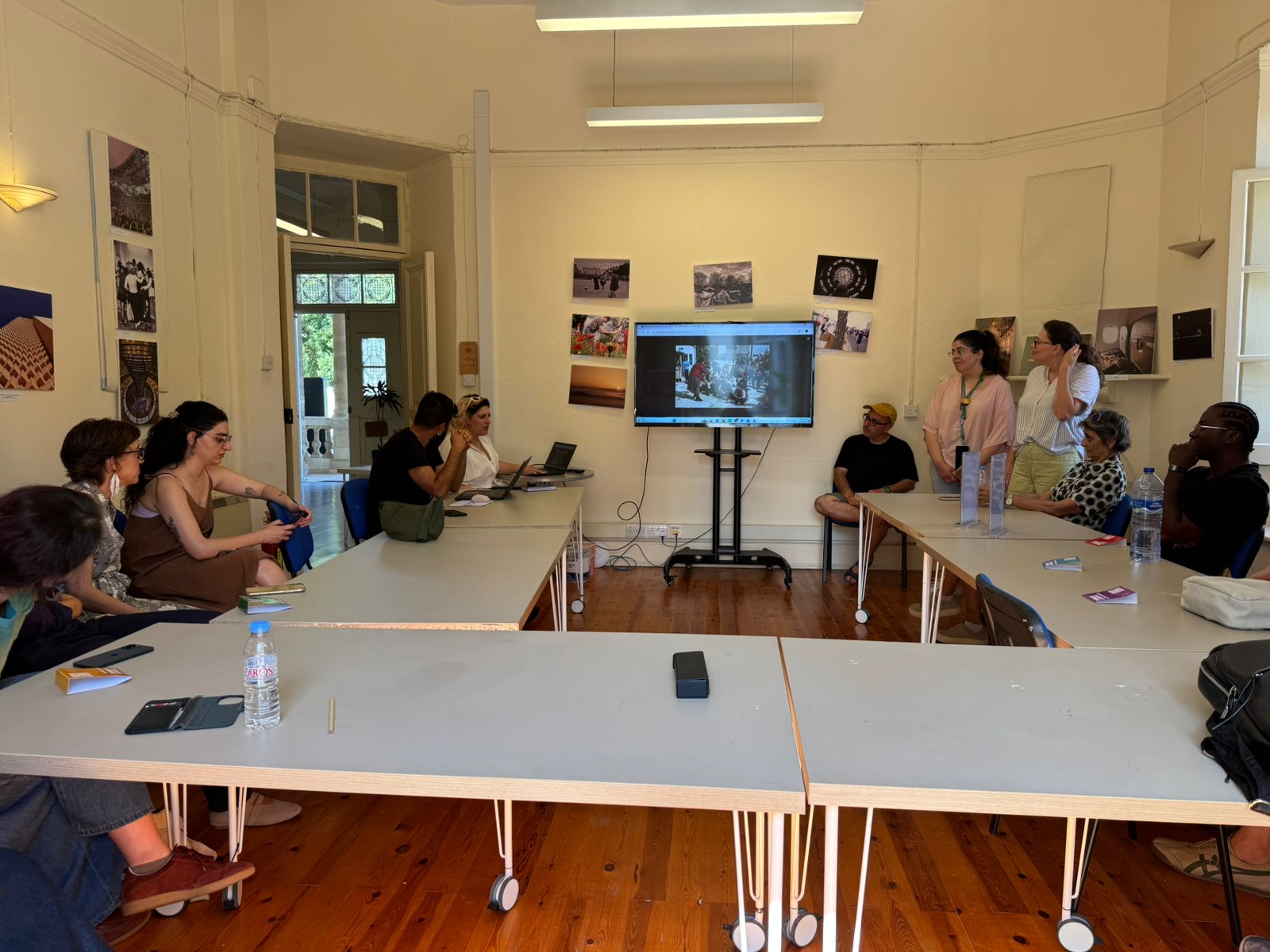
Larnaka2030 introduced ASSEMBLE to two of their flagship projects. Synnegizmos works with the city's post-1974 refugee housing estates, approaching them as sites of living cultural heritage and connecting them with similar communities across the Eastern Mediterranean. Patkia Vatkia maps five villages of the Dromolaxia-Meneou municipality through story, memory and short performance, led by seven women from the communities themselves. Both projects operate according to a logic that echoed the workshop's central question: "The process is the project." Sustainability is not a fixed outcome but an ongoing negotiation with the people and places involved.
Costas Manouris of Larnaka2030 articulated the city's relationship to ASSEMBLE's broader framing with precision: "The core concept of Larnaka2030 is common ground, not about erasing differences, but about creating spaces where different histories, identities and experiences can coexist with dignity, dialogue and mutual respect."
What the Lab opened
The Larnaca Lab did not resolve the questions it raised. It was not designed to. What it produced was a shared vocabulary, a clearer mapping of where the gaps in existing support structures lie, and a set of working relationships between Fellows, partners and the Cypriot cultural community that will continue to develop across the programme.
The questions opened in Larnaca - about ecology and displacement, cultural sovereignty and archival practice, the ethics of care in curatorial work and the structural conditions that make long-term practice possible - remain live across all of them.
The Lab confirmed that what ASSEMBLE is building, a fellowship structured around stability, peer exchange and long-term relationships rather than short-term intervention, responds to a real and documented gap in how the cultural sector supports displaced practitioners.
Invited Speakers
Julie Trébault
ARC - Artists at Risk Connection
Alix Pornon
Cité internationale des arts